Pickleball eye protection: why it makes a useful gift
Published on October 22, 2026 Edited October 22, 2026 Approx. 4 min
Signed: the Idées à Offrir editorial team.
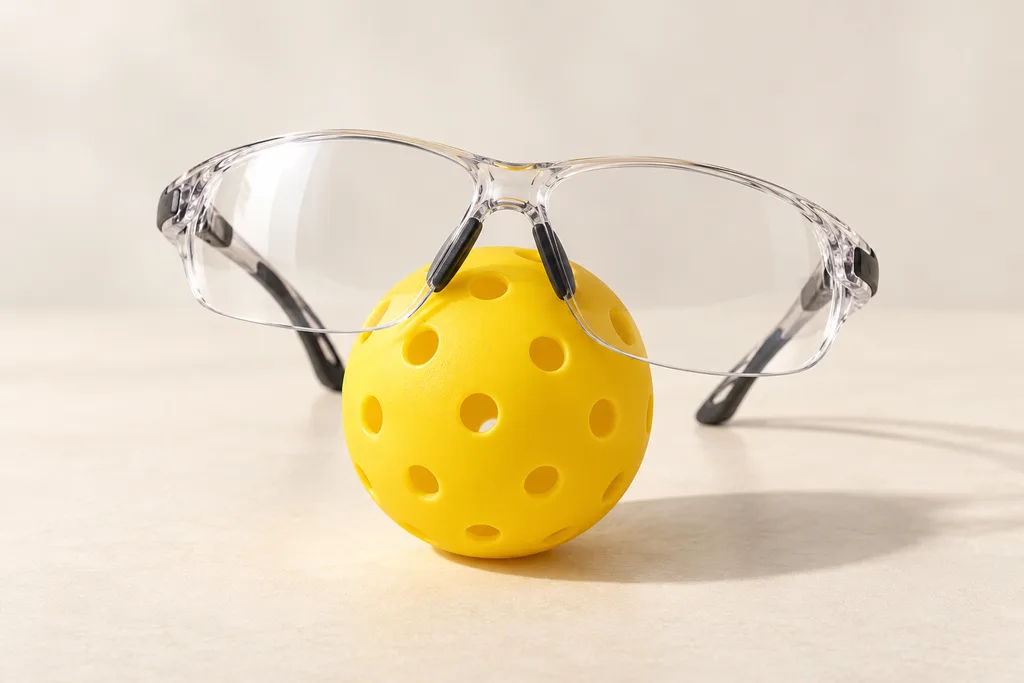
Take a seat for "Pickleball eye protection: why it makes a useful gift," a route we've kept clear, lively and free of pitfalls. You'll learn how real the risk of eye injury is and what to check so you give protection that fits. The trip breaks down like this: what the court reveals, the chain of events behind the injuries and a selection checklist. This guide is for a specific reader: relatives, friends and colleagues of pickleball players, often new to the sport, who want a gift that suits the person's level and how they play.
What the court reveals
A precise count helps set the scene. A study published in JAMA Ophthalmology on October 16, 2025, based on US emergency room data (NEISS), documented 73 eye injuries from 2005 to 2024. Of those, 33 happened in 2024, which works out to about 1,262 estimated cases nationwide in 2024 after weighting.
Here's a useful benchmark: about 70% of the pickleball eye injuries recorded involved players aged 50 and older. The average age of those injured was 54.
The common thread is this: eye injuries range from corneal abrasions and lacerations (minor) to retinal detachments, orbital fractures and trauma to the eyeball (serious).
A precise count helps here too. In this analysis, 43% of eye injuries came from a direct hit by the ball, 28% from falls and 12% from paddle strikes.
The chain of events behind the injuries
Start with the basic idea: "pickleball elbow" comes from repeated wrist and arm movements that strain the tendons and cause inflammation on the outside of the elbow. Keep that in mind as you read on.
The starting point is this: in that study, overuse injuries were linked to a high volume of play, a lower skill level and tournament participation. Women and tournament players reported more lateral epicondylalgia.
One rule worth knowing: a FFT pickleball license has existed since the 2025 sports season (licenses were activated on September 1, 2024). It gives access to competitions and an official ranking.
The selection checklist
Here's the checklist to hold up against each option.
- Court shoes give the ankle support and sole grip that pickleball demands, unlike running shoes. Unsuitable shoes raise the risk of ankle and knee injury.
- A pickleball bag is first about keeping gear organized. Look for compartments for essentials (wallet, keys, water bottle, sweat towel) and room for a water bottle.
- A water bottle belongs in the bag — dehydration contributes to muscle fatigue and cramps, which raise the risk of injury, especially outdoors in hot weather.
- In 2024, the American Academy of Ophthalmology recommended that pickleball eyewear meet the ASTM F3134 standard, presented as the current benchmark for most racquet sports.
The slippery spots
There's a false friend here. Ordinary prescription glasses or sunglasses don't protect the eyes well enough in pickleball: they can shatter more easily. Frames without lenses are a bad idea too, because you need a real physical barrier in front of the eye.
Choosing eye protection to give
Criteria for giving protective eyewear the person will actually wear.
- Choose glasses designed for racquet sports — Everyday glasses aren't built to withstand an impact.
- Check that they work over prescription glasses — Many players already wear them.
- Favor comfort and a secure fit — Gear that gets in the way stays in the bag.
- Allow for an exchange — How glasses fit varies from one face to another.
Last stop
Keep these pages handy, and reread the section that speaks to you most before you decide.
On the same topic
- Warming up before you play: a simple method to pair with a gift — You can suggest a warm-up routine and pick a small gift that encourages it. On this leg of the trip: the logic behind the method.
- Tennis elbow and pickleball: which gifts ease and prevent it? — You'll learn to tell prevention (warm-up, support) apart from what calls for medical advice. We take it one step at a time.
Sources cited
- Surge in pickleball correlated with increased rate of eye injury — Summary of a JAMA Ophthalmology study: about 3,112 estimated eye injuries from 2005 to 2024, including 1,262 in 2024; eye protection recommendation. Page last visited on 2026-10-18.
- Pickleball panic over eye injuries (The Ophthalmologist) —
- Common pickleball injuries: 7 tips to protect your body and stay on the court — Common injuries (elbow, shoulder, ankle) and prevention tips, including court shoes; background only. Page last visited on 2026-10-18.
- Overuse Injuries and Epicondylalgia in Recreational Pickleball Players —
- FFT : licence Club, tarifs et nouveautés de la saison, saisie des licences pickleball —
- Everything you need to play pickleball (NBC News Select) — News article on a player's basic equipment. Page last visited on 2026-10-21.
- Pickleball eye injuries (Mass General Brigham) — Interview with an ophthalmologist on eye injuries and protection. Page last visited on 2026-10-21.
The advice on protection (eyes, joints, shoes) is general and doesn't replace the advice of a doctor or health professional.
The equipment approval rules cited come mainly from USA Pickleball. In France, the FFT has set the official framework since 2026: check the requirements before giving gear meant for competition.
Our fact-check.
- This article cites 7 sources: 2 reference organizations, 1 scientific publication and 3 specialized or general news articles.
- Facts checked against their sources on October 19, 2026.
- The method we follow: Nos engagements.